

Super User
Policy brief 3: Strengthening Accountability and Responsiveness in Municipalities – The Role of IGR
Policy brief 2: Access to Basic Services in Insecure Environments
Policy Brief 1: The realities of Free Basic Services and Indigency
Key Performance Indicators: Poverty Indicators and the Seven Strategic Priorities of the City of Cape Town
Local politics and factionalism: Local government as a site of contestation
Urban Citizenship Conference, 12 – 13 June 2019
Isandla Institute is hosting a national conference on 12 – 13 June 2019, entitled “Urban citizenship as a verb: Facilitating action through coalitions for change”. The conference is an opportunity for practitioners, activists and analysts from different sectors to share knowledge, practice and policy responses on how to support, expand and sustain urban citizenship.
The programme is structured to reflect on urban citizenship from a variety of perspectives, including the urban political system; urban land reform; shelter and informal settlement upgrading; employment; nutrition and the urban food system; and, environmental sustainability/resilience. There will also be a focus on the role of collaboration and urban coalitions in bringing about change.
The Urban Citizenship Conference marks the conclusion of a 5½-year project and commemorates Isandla Institute’s 20th anniversary – an occasion for reflection, celebration and forward-looking!
For more information about the conference, send an email to Esta dirección de correo electrónico está siendo protegida contra los robots de spam. Necesita tener JavaScript habilitado para poder verlo.
Planning for Informality web tool – an Isandla Institute Initiative
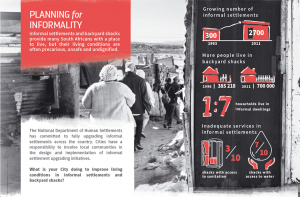
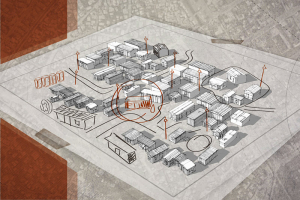
The Planning for Informality web tool was developed by Isandla Institute in partnership with Open Data Durban and launched in August 2017.
Municipalities, mandated by the National Department of Human Settlements, have committed to upgrading 750 000 informal settlement dwellings by 2019. Comprehensive informal upgrading strategies and plans are important elements in achieving this goal. The web tool tracks how the major metros are progressing towards this, based on reporting and policy commitments in core annual municipal documentation. The core municipal documents include the Integrated Development Plan (IDP) reviews, Built Environment Performance Plan (BEPP), Service Delivery Budget and Implementation Plan (SDBIP), and Medium Term Expenditure Framework (MTEF).
The Planning for Informality web tool determines the progress of South Africa’s response to informal settlements. A better understanding of informality in South African cities will allow for better decision-making and analysis. The web tool also opens up data about municipal upgrading plans and strategies and makes it accessible to a wider audience for transparency and accountability purposes.
We invite relevant government officials, the NGO community, concerned citizens, and community leaders to engage with the web tool.
To access the Planning for Informality web tool, visit www.planning4informality.org.za
Strategic Planning for the NDA
Isandla Institute facilitated a strategic framework discussion and the strategic thinking and planning process for the Board of the NDA as it geared-up to expend approximately R300 million per annum for use by South African civil society organisations who work on poverty eradication, 1999.
Background paper for Human Development Report
Isandla Institute was commissioned by UNDP-South Africa to prepare a background paper on ‘new spaces for democratic engagement’ between the state and civil society in South Africa. The paper informed the Human Development Report for South Africa, 2000.